Pittsburgh's Own Regional Notables of Jazz
AFRO-AMERICAN MUSIC INSTITUTE CELEBRATES 36 YEARS
http://www.indiegogo.com/projects/building-today-for-tomorrow/x/267428
Pain Relief Beyond Belief
http://www.komehsaessentials.com/
PITTSBURGH JAZZ
From Blakey to Brown, Como to Costa, Eckstine to Eldridge, Galbraith to Garner, Harris to Hines, Horne to Hyman, Jamal to Jefferson, Kelly to Klook; Mancini to Marmarosa, May to Mitchell, Negri to Nestico, Parlan to Ponder, Reed to Ruther, Strayhorn to Sullivan, Turk to Turrentine, Wade to Williams… the forthcoming publication Treasury of Pittsburgh Jazz Connections by Dr. Nelson Harrison and Dr. Ralph Proctor, Jr. will document the legacy of one of the world’s greatest jazz capitals.
Do you want to know who Dizzy Gillespie idolized? Did you ever wonder who inspired Kenny Clarke and Art Blakey? Who was the pianist that mentored Monk, Bud Powell, Tad Dameron, Elmo Hope, Sarah Vaughan and Mel Torme? Who was Art Tatum’s idol and Nat Cole’s mentor? What musical quartet pioneered the concept adopted later by the Modern Jazz Quartet? Were you ever curious to know who taught saxophone to Stanley Turrentine or who taught piano to Ahmad Jamal? What community music school trained Robert McFerrin, Sr. for his history-making debut with the Metropolitan Opera? What virtually unknown pianist was a significant influence on young John Coltrane, Shirley Scott, McCoy Tyner, Bobby Timmons and Ray Bryant when he moved to Philadelphia from Pittsburgh in the 1940s? Would you be surprised to know that Erroll Garner attended classes at the Julliard School of Music in New York and was at the top of his class in writing and arranging proficiency?
Some answers can be gleaned from the postings on the Pittsburgh Jazz Network.
For almost 100 years the Pittsburgh region has been a metacenter of jazz originality that is second to no other in the history of jazz. One of the best kept secrets in jazz folklore, the Pittsburgh Jazz Legacy has heretofore remained mythical. We have dubbed it “the greatest story never told” since it has not been represented in writing before now in such a way as to be accessible to anyone seeking to know more about it. When it was happening, little did we know how priceless the memories would become when the times were gone.
Today jazz is still king in Pittsburgh, with events, performances and activities happening all the time. The Pittsburgh Jazz Network is dedicated to celebrating and showcasing the places, artists and fans that carry on the legacy of Pittsburgh's jazz heritage.
WELCOME!
Groups
Badge
Duke Ellington is first African-American and the first musician to solo on U.S. circulating coin
MARY LOU WILLIAMS
INTERVIEW
-
Labeling Machine
- Female
- Gadsden
- United States
- Blog Posts
- Events
- Groups
- Photos
- Photo Albums
- Videos
RSS
Packaging Machine Selection for Glossy & Coated Bottles
Engineering-Driven Solutions for U.S. Manufacturers (Especially California)
High-gloss and coated bottles are prized for their aesthetic impact, but they present unique handling challenges that many packaging lines are not designed to manage. California and other U.S. manufacturers that rely on premium packaging often encounter unnecessary rejects, scuffing, label misalignment, and unstable container handling because standard packaging machinery applies force and friction without accounting for surface sensitivity.
In packaging machinery, glossy and coated bottles behave differently due to reduced surface friction and increased sensitivity to contact forces. Addressing these challenges requires machine designs that control contact forces, stabilize containers, and precisely manage fill, cap, and labeling operations.
This article explains why high-finish containers create unique production risks, where common assumptions fall short, and what engineered packaging machine features — including a relevant Accutek solution — help manufacturers protect premium packaging without sacrificing productivity.
Why Glossy & Coated Bottles Require Specialized Machine Selection
Glossy finishes, soft-touch coatings, and metallic labels all alter how a bottle interacts with packaging machine. Standard machines expect higher friction and more robust surfaces — conditions that increase the risk of cosmetic defects when handling coated bottles.
Common surface-related problems on packaging lines include:
- Bottle slipping on conveyor belts
- Scuffing from guides and transfer points
- Misaligned labeling due to unstable bottle motion
- Cosmetic damage during capping torque application
These are not random quality issues — they are mechanical contact and control issues that reveal gaps in machine engineering.
Where Common Assumptions Break Down
Many manufacturers address surface defects by slowing down the line or changing belt material, assuming these fixes will solve the problem. In most cases, they don’t.
| Assumed Fix | What Actually Happens |
|---|---|
| Slow down conveyors | Contact forces still cause slippage |
| Softer belts only | Belt softness doesn’t control lateral motion |
| Add buffing material | Masks the symptom, not the cause |
| Blame operators | Defects occur mechanically, not manually |
The true problem is that conventional packaging machine does not manage contact force, container stability, and precision motion in a coordinated way.
Engineering Controls That Protect Glossy & Coated Surfaces
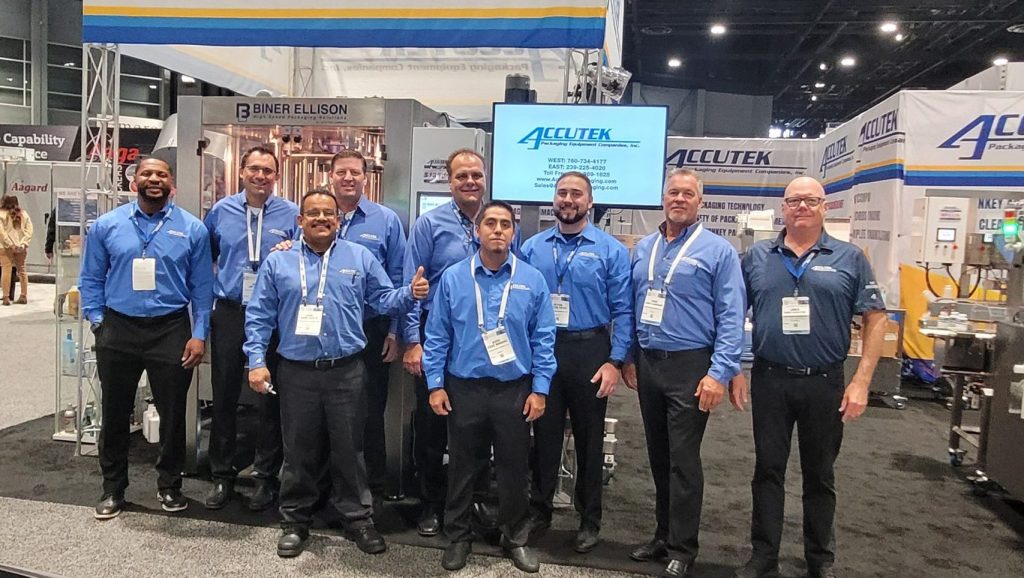
What matters in machine selection is how equipment manages motion, contact, and stabilization throughout the packaging process.
Key Engineering Features
| Engineering Capability | What It Achieves |
|---|---|
| Controlled bottle infeed | Prevents slipping before processing |
| Soft-touch contact surfaces | Minimizes abrasion and scuff marks |
| Adjustable side-grip mechanisms | Keeps bottles centered without crushing |
| Precision motion control | Smooth acceleration and deceleration |
| Sensor-driven timing | Ensures consistent handling |
…
The post appeared first on Accutek Packaging Machine Equipment.
Gifts Received
Labeling Machine has not received any gifts yet
Labeling Machine's Page
Profile Information
- Artist or Fan
- fan
© 2026 Created by Dr. Nelson Harrison.
Powered by


Comment Wall
You need to be a member of Pittsburgh Jazz Network to add comments!
Join Pittsburgh Jazz Network